
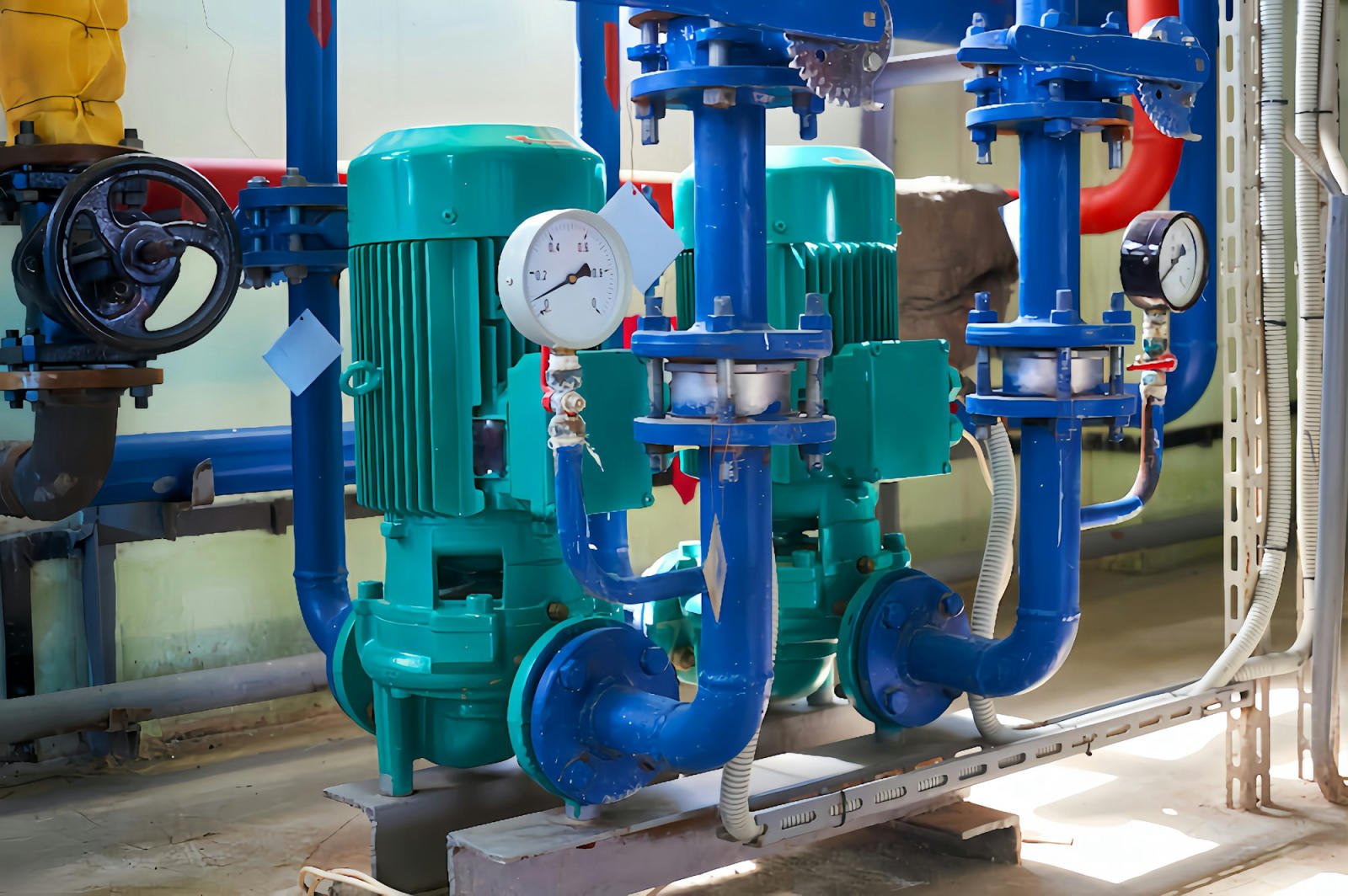
Predictive maintenance
software for critical assets.
Vibration and temperature sensors on pumps, motors, compressors and fans. When a reading crosses its limit, the right people know and the repair is planned before the breakdown.
Act when the data says so, not when the calendar does.
Reactive maintenance repairs after a failure. Preventive maintenance acts at fixed intervals, sometimes too early, sometimes too late. Predictive maintenance follows the real condition of the machine and acts when the data shows a change.
A bearing that starts to wear changes its vibration weeks before it fails. If someone is watching the signal, it is replaced in a planned stop, with the part on the shelf and no unplanned downtime.
See the full reactive, preventive and predictive comparison.
Read asset health. Don’t guess it.
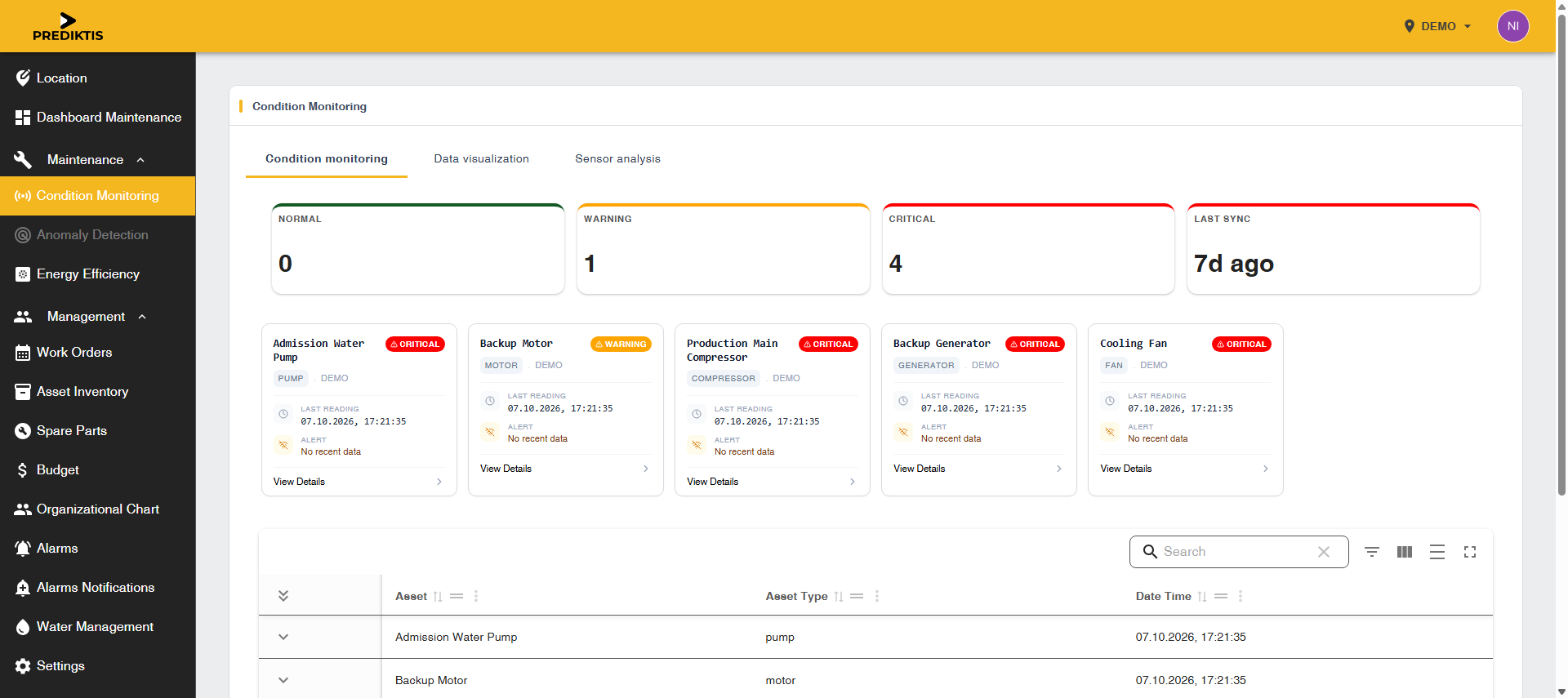
Sensors on critical equipment send readings to PREDIKTIS continuously. Each asset gets a clear status, Normal, Warning or Critical, based on the limits you set.
- Overview of normal, warning and critical assets with the time of the last sync
- One card per asset with the latest reading and active alert
- Charts and sensor analysis to compare readings over time
- Vibration analysis to spot imbalance, misalignment and wear early
 ● Pump P-02 · 2.1 mm/s · Normal
The right alert, in the right inbox.
Set a warning value and a damage value for every sensor and choose who is notified by email. Every alarm is stored with its reference values.
- Two levels per sensor: warning and damage
- Notification emails configured per device
- Alarm history per asset, by day, week, month or year, exportable
The warning becomes a planned intervention.
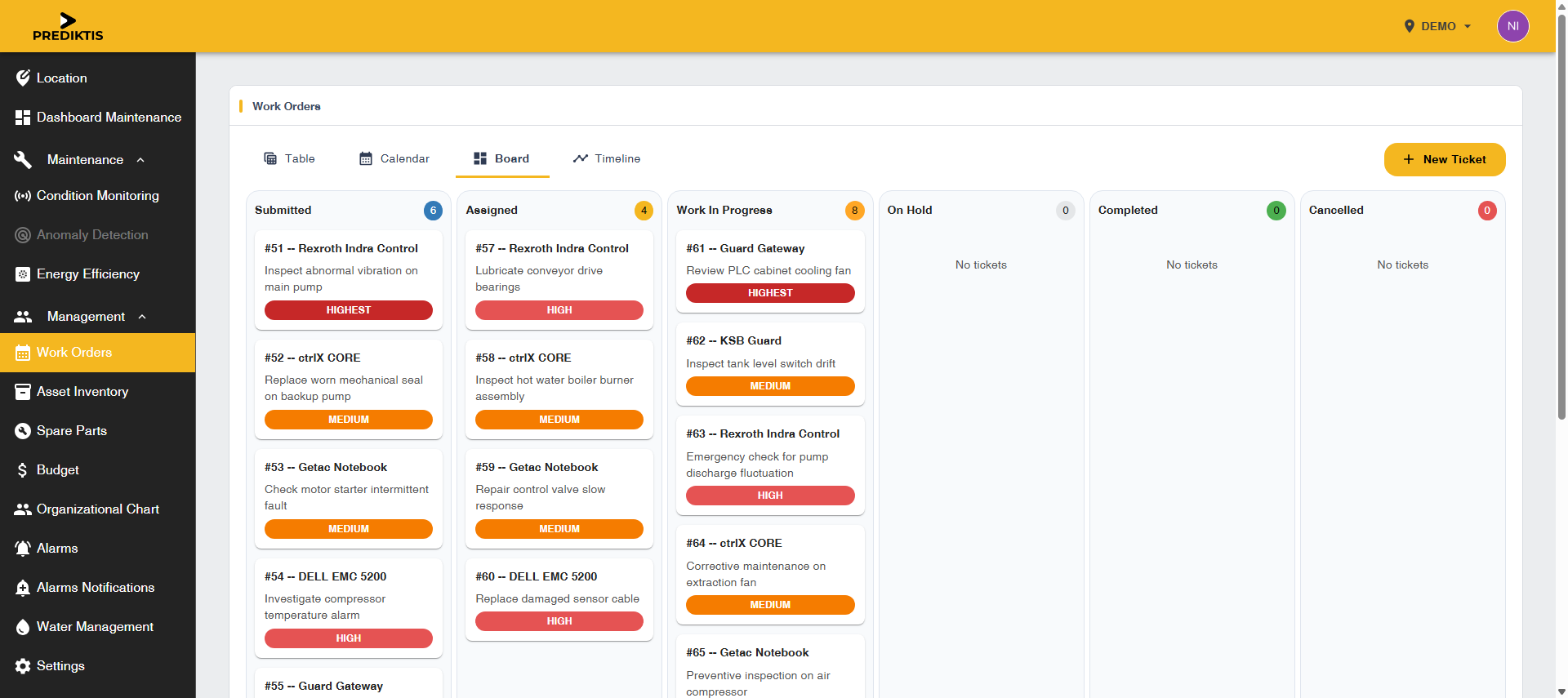
Because monitoring and work orders live in the same platform, a bearing alarm becomes a ticket on the asset, with a technician, planned hours, priority and the parts it needs.
- The ticket is closed with photos and time spent
- The cost lands on the right cost center
- The alarm and repair history stays with the asset
The machines worth fitting with sensors.
We start with the assets whose downtime costs the most. The list is agreed together during the assessment.
Pumps
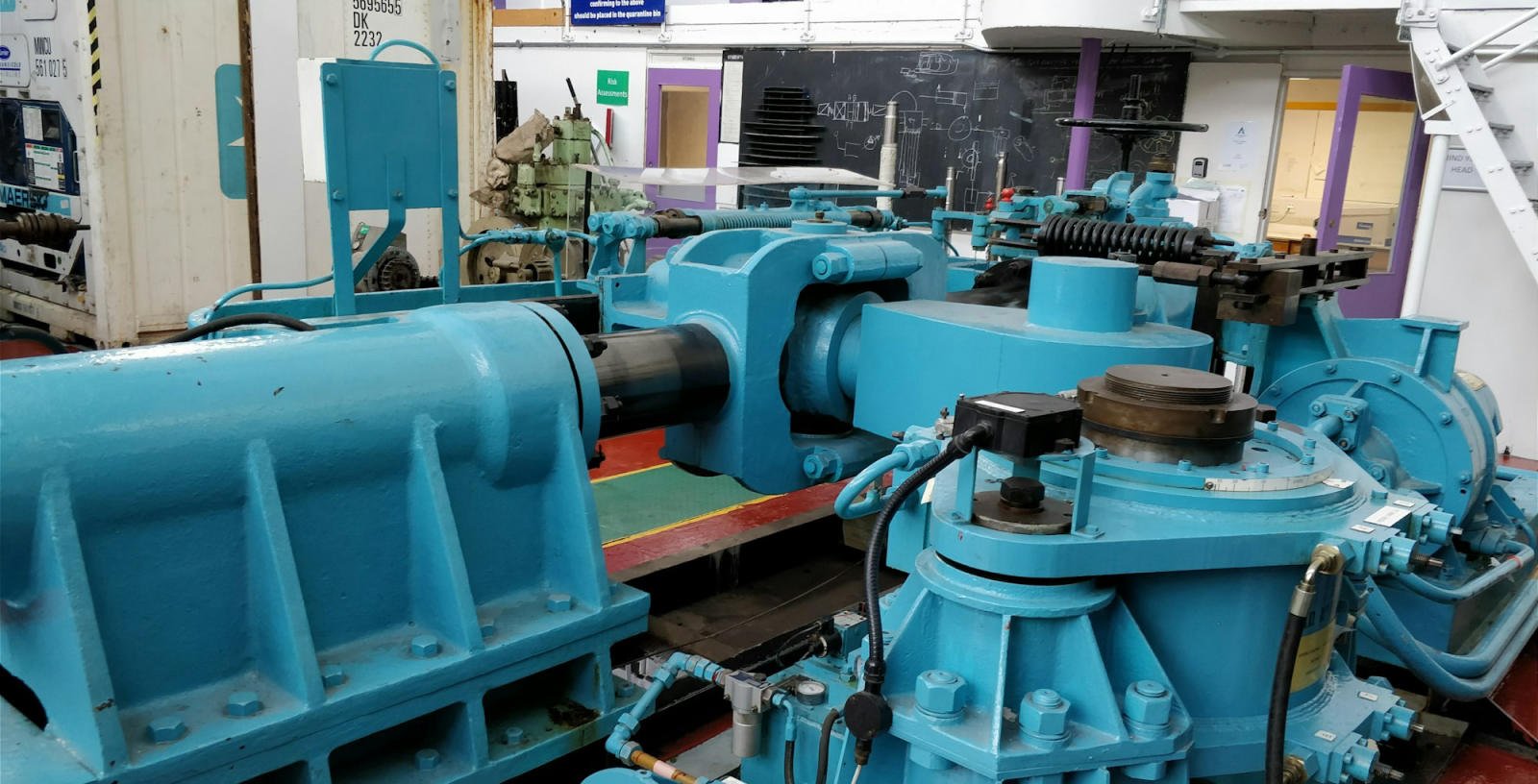
Pumping stations, circulation and transfer pumps. Bearing vibration and temperature.
Electric motors
Drives on production lines, fans and conveyors.
Compressors
Compressed air and cooling, where one stop blocks the whole process.
Gearboxes
Gears where wear shows up in vibration first.
Generators
Backup generators and standby motors that must start when needed.
Anomaly detection In development
Models that learn each machine’s normal behaviour from its own history.
About predictive maintenance.
What is the difference between preventive and predictive maintenance?
What do the sensors measure?
Do you use artificial intelligence?
Who receives the alerts?
How do we start?
Start with your
most critical machine.
A pilot on the assets that matter most, with targets agreed before we start.